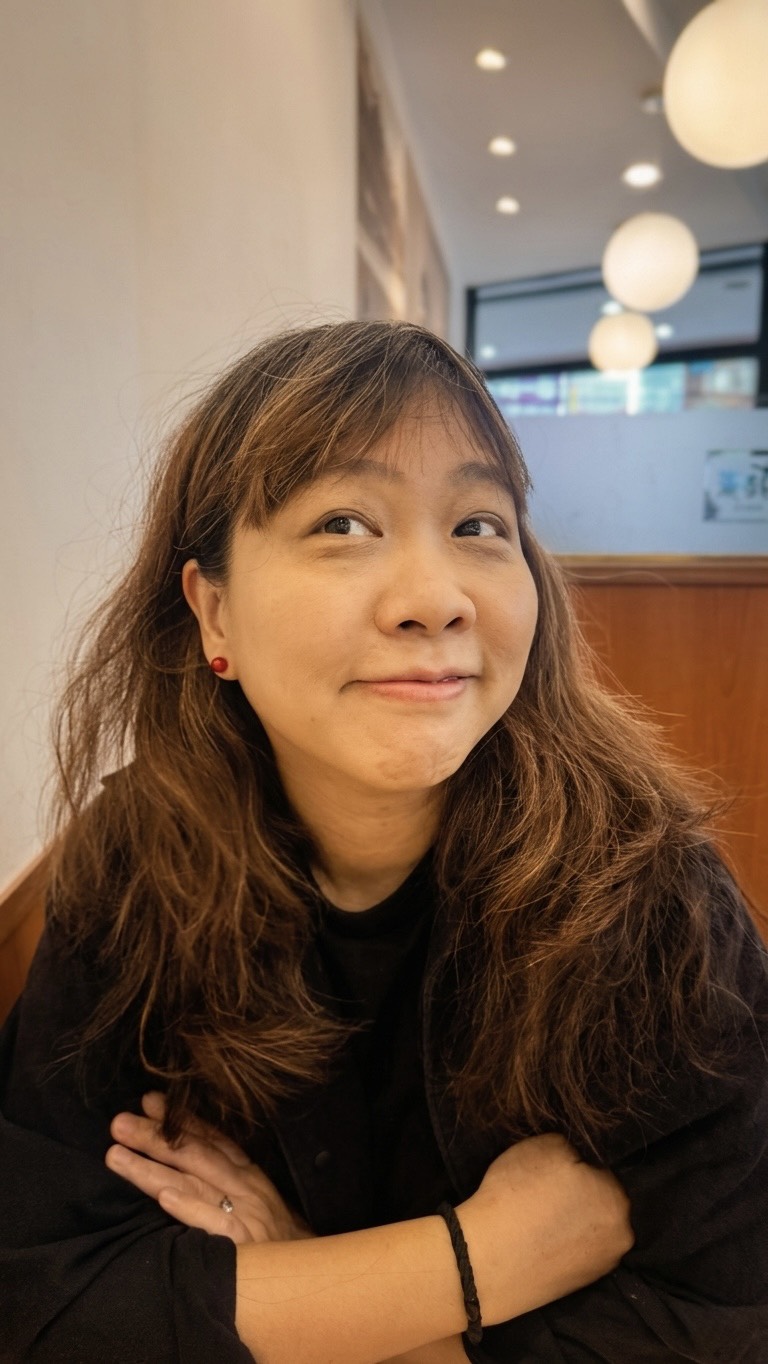
I became a designer at a bookstore.
Not officially — I was a college student at the time, disappearing into the architecture and design section at Eslite the way other people disappear into novels. The Essential House Book was one of those early encounters that made something click: beautiful spaces aren’t a luxury added on top of life. They’re how life feels. That seemed worth spending a career on.
That instinct eventually took me to the Glasgow School of Art, where I studied interior design — and spent every free weekend on a train. Denmark for minimalism that actually breathes. The Vitra Design Museum in Germany. The Chapelle Notre-Dame-du-Haut in France. London’s particular way of layering centuries without apology. What struck me most wasn’t any single style — it was the sheer variety of ways people think about how a space should feel. European design doesn’t come from one idea. It comes from many coexisting ideas, and seeing that live was an education you can’t get in a classroom.
I’ve been a principal at Ji Chuang Interior Design in Taipei since 2013. In that time I’ve learned that the best moments in a project usually come from listening carefully to who someone actually is — then making a material or pattern decision that reflects it. A marble feature wall in a Linkou residence: bold in an otherwise restrained space, because the client had that kind of confidence. Spanish floor tiles in a Taipei home for an artist: something that would vanish in a busier room, but in a minimal one, it stops you. Personality doesn’t compete with minimalism. In the right environment, it’s what you notice first.
My clients often mention that something in the work feels different — a texture, a proportion, a detail that came from somewhere. It usually came from somewhere specific: a morning in a Danish apartment, an afternoon in a Roman piazza, a bar in Glasgow at closing time. Interior design is inseparable from lived experience. The more you’ve seen how people live beautifully — in different countries, different climates, different philosophies — the more you have to give.
Texas has been in the back of my mind for a while — not as a destination, but as a recognition. The warmth I kept finding in Latin design, in Mexico City markets and Provençal light and Spanish tilework, isn’t far from what you find in Fort Worth: strong color, cultural depth, a comfort with the ornate that doesn’t apologize for itself. That’s a conversation I’ve been wanting to have with a new set of clients. I’m relocating to the DFW area in late 2026 and beginning to take on new projects.